
Sopp og lav
Fungi
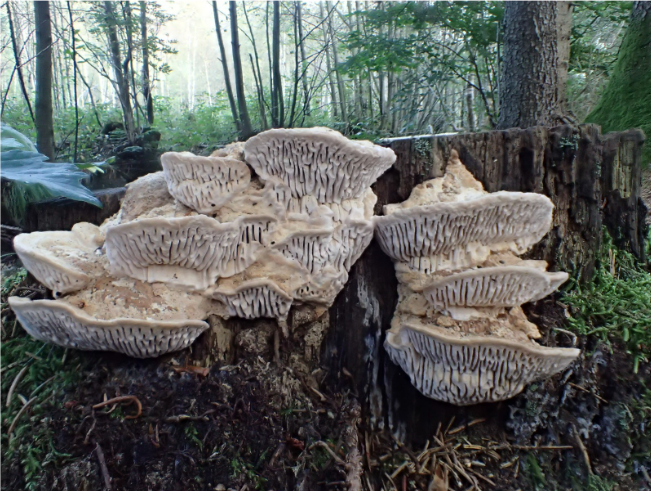
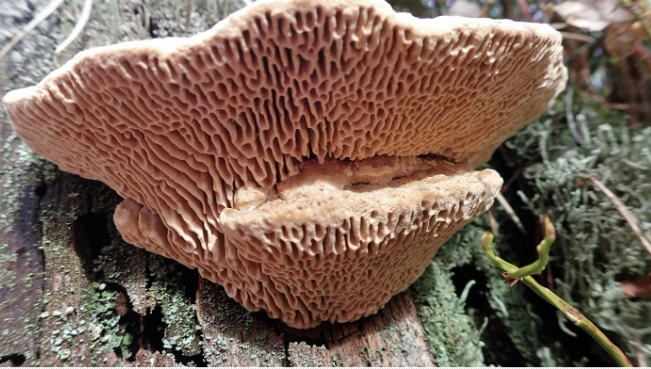
There are more than 30 threatened species of wood-dwelling fungi that live in association with oak, and as many as 11 of these are so specialized that oak is the only type of tree they occur on. The oak mazegill (Daaedalea quercina) is an example of a specialised oak fungi. This fan-shaped fungi with characteristic labyrinthine pores is not currently threatened.
In addition to on the tree itself, a variety of organisms also live in the soil around the oak. In particular, rich oak forests house many oak-related, and not least rare, species of soil-dwelling fungi. No less than 24 of these species are so-called mycorrhizal fungi that live in symbiosis with oak roots.
Lichen
Oak is an important tree species for lichens in general, and especially for threatened species – no less than 25% of threatened lichen species dwell on oaks. The species composition changes with the age of the tree. Younger trees will have a predominance of species that live on smooth bark, while the species that live on rough, cracked bark gradually take over as the tree ages. For example, it has been shown that several specialised lichen species only live on oak trees that are at least 200 years old.
Other species
Not only typical decomposers appreciate oaks. Many species of birds and bats also enjoy having a large oak in the immediate area – both to find food and as a nesting and roosting place. Tawny owls, for example, like to nest in hollow trees, as do a number of other hole-nesting bird species. Bats can establish female breeding colonies in hollow trees, while the males like to stay in hollow trees during the day in summer.
Sources:
Direktoratet for naturforvaltning 2012. Handlingsplan for utvalgt naturtype hule eiker
www.hule-eiker.no