
Insects
There are many species that depend on oaks. In Norway, oak is regarded as the most important type of tree for insects. Which individual species reside in each individual oak varies greatly from oak to oak and depends on whether the oak grows in a cultivated landscape or in the forest. The species associated with old oaks can mainly be divided into two: those that chew foliage or suck plant sap, and those that live in the wood. The latter are the reason for the oaks’ importance to biodiversity.
Specialised insect species find a wide range of living conditions in old, rough oaks, and the cavities in the old oaks are of particularly great importance. Bettles dominate these cavities but you can also find a number of other invertebrates, such as spiders, flies, bumblebees, centipedes, ants, moths and snails.
Examples of beetles that live in association with oaks are the European stag beetle (Lucanus cervus) and the hermit beetle (Osmoderma eremita). The stag beetle is the largest beetle in Northern Europe – males can grow to a length of 10 cm! They have powerful jaws, which they use to fight over females. Adult stag beetles are attracted to oak sap, while the larvae feed on oak roots underground. The stag beetle probably had a greater distribution in Norway before the large oak forests were cut down in Southern Norway.


The hermit beetle lives inside hollow oaks and ash trees. Today, it has only been found in one location in Norway (the county Vestfold) but it probably had a wider distribution before the oak forests in Southern Norway were cut down. This is Norway’s rarest beetle, and it is among the species with a particularly low dispersal ability – very few individuals leave the tree in which they hatched.
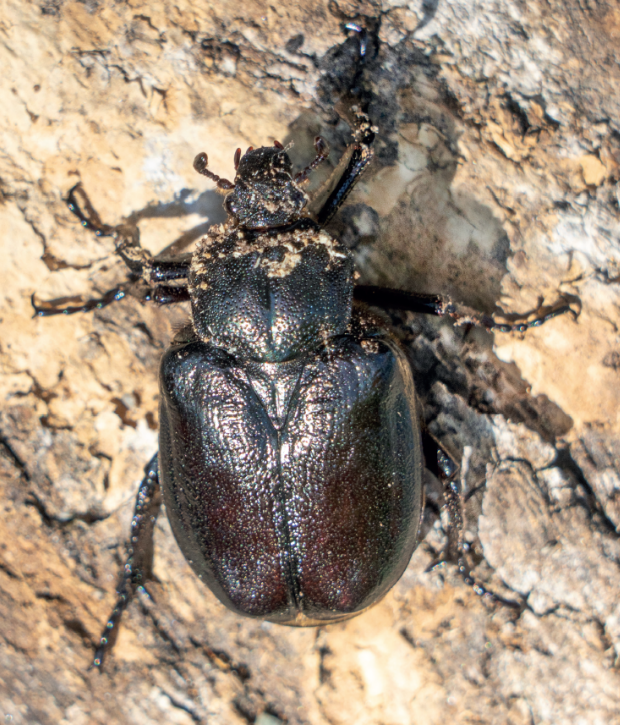
Ants often nest in old oaks, which in turn bring several other insects that live in symbiosis with the ants. In addition, there are specialised predators and parasites among the oak-associated insects – these eat or have parasitic relationships with species that live on or in the oak.
Sources:
Direktoratet for naturforvaltning 2012. Handlingsplan for utvalgt naturtype hule eiker
www.hule-eiker.no