Natural history collections – a library of past and present flora and fauna
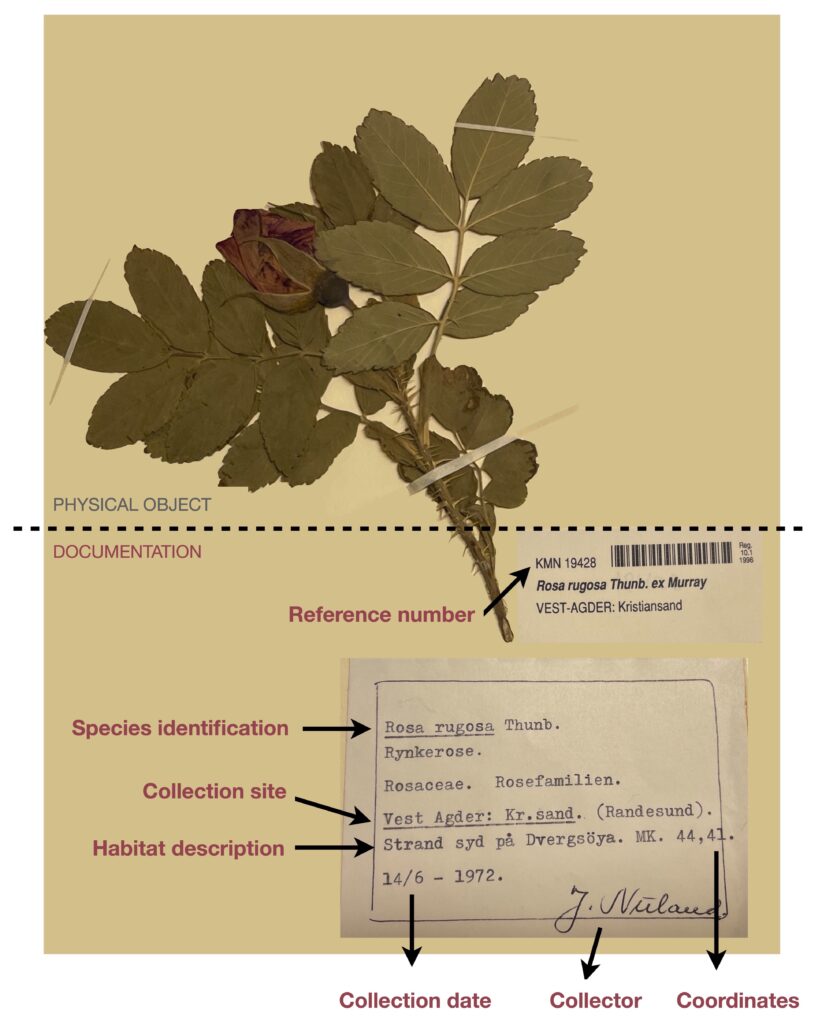
In natural history collections you can find, among other things, pressed plants, seeds, dried mushrooms and algae, bird skins, eggs, pinned insects, tissue samples and stuffed or alcohol-fixed animals. Every single animal skin or plant in such collections is called an object.
A lot of information comes with each object, including where and when it was found and who found it. In other words, an object represents a discovery of an organism at a given time and place – natural history collections can thus be compared with a library of the flora and fauna of the past and present.
Animals and plants have been collected for natural history collections from around the globe for hundreds of years. In the last 350 years alone, around 390 million separate plant objects have been collected in natural history collections worldwide!
This huge library has many uses. For example, natural history collections can be used to better understand alien species. In the collections there are often objects from the time before, during and after the colonization. Thus, natural history collectsion can be used to determine when an alien species came to Norway, and how it has spread further within the country.
In order to reduce or prevent the spread of new alien species, we can study which roads today’s alien species have used to get to Norway, and whether it has been introduced one or more times. By studying the genetic material (DNA) of the objects, one can discover the place of origin of alien species and possible routes of immigration. New technological innovations actually enable the study of DNA from centuries-old natural history material!
The most amazing thing about invasive species is that they are often not invasive in their original habitats – they spread aggressively only after introduction to a new area. Why this happens is unknown, but one hypothesis is that species may have increased competitiveness as a result of the absence of natural enemies such as predator, parasites and diseases. In the absence of enemies, less energy can be spent on defense and more on growth and reproduction. DNA studies using material from natural history collections could potentially reveal the reasons behind the success of invasive species.