
Coastal heathlands – ancient cultural land
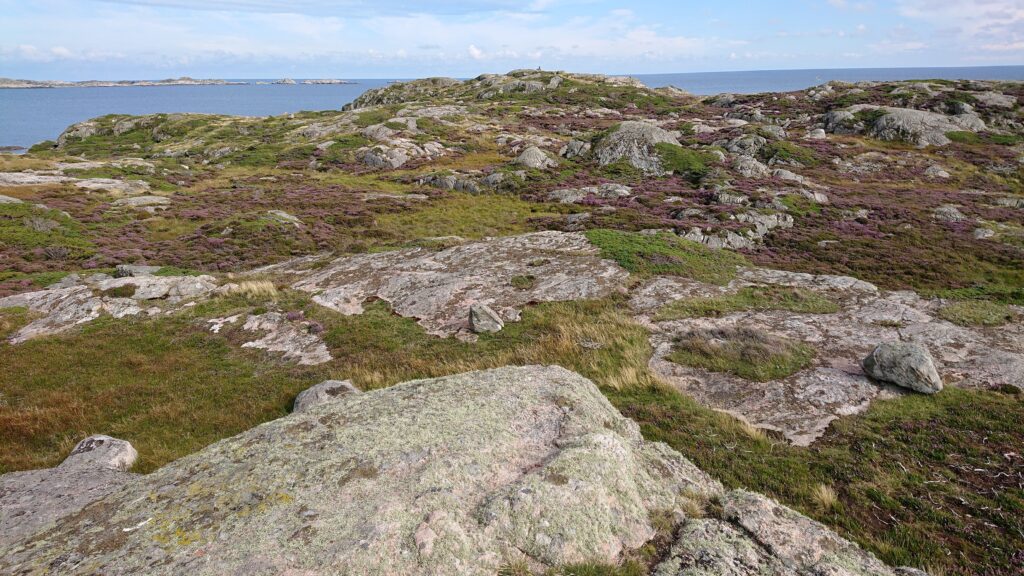
Coastal heathlands are open, treeless areas along the coast where a lot of heather and other dwarf shrubs grow. You often find coastal heathlands in patches in the coastal landscape among other natural habitats such as beach meadows, beach rocks and marshes.
The most characteristic species in coastal heathlands is common heather, Norway’s national flower. The common heather is easily recognized by its many pink flowers and evergreen, small leaves that sit in four straight rows along the branches. Other typical species found in coastal heathlands are blueberry, lingonberry, crowberry, dwarf cornel, wavy hair-grass, carnation sedge, tormentil, and heath spotted-orchid. From Lindesnes to Stavanger, you can also find the endangered species marsh gentian.
In Norway, you will find the coastal heathlands in the outermost coastal areas with a mild winter climate, in a belt along the entire coast from Kragerø to Lofoten. This is the oldest type of cultural land in Norway, and it originated as early as the Stone Age! Today’s coastal heathlands was thus shaped through thousands of years of regular heather burning, clearing of forests and scrub, and year-round grazing. And many of the plants that typically grown in coastal heathlands are adapted and dependent on such regular disturbances.
Coastal heathlands make an important contribution to the biological diversity of the coastal areas, and many species of insects and birds depend on the heather being kept in active operation. The majority of the coastal heathland area is now overgrowing as a result of the cessation of traditional use. In addition, the areas are subject to afforestation and the construction of cabins, houses, the oil industry and wind power. In Norway, as much as 90% of the former coastal heathland areas have actually disappeared, and coastal heathland is now considered a highly threatened habitat type.