
The white-tailed eagle
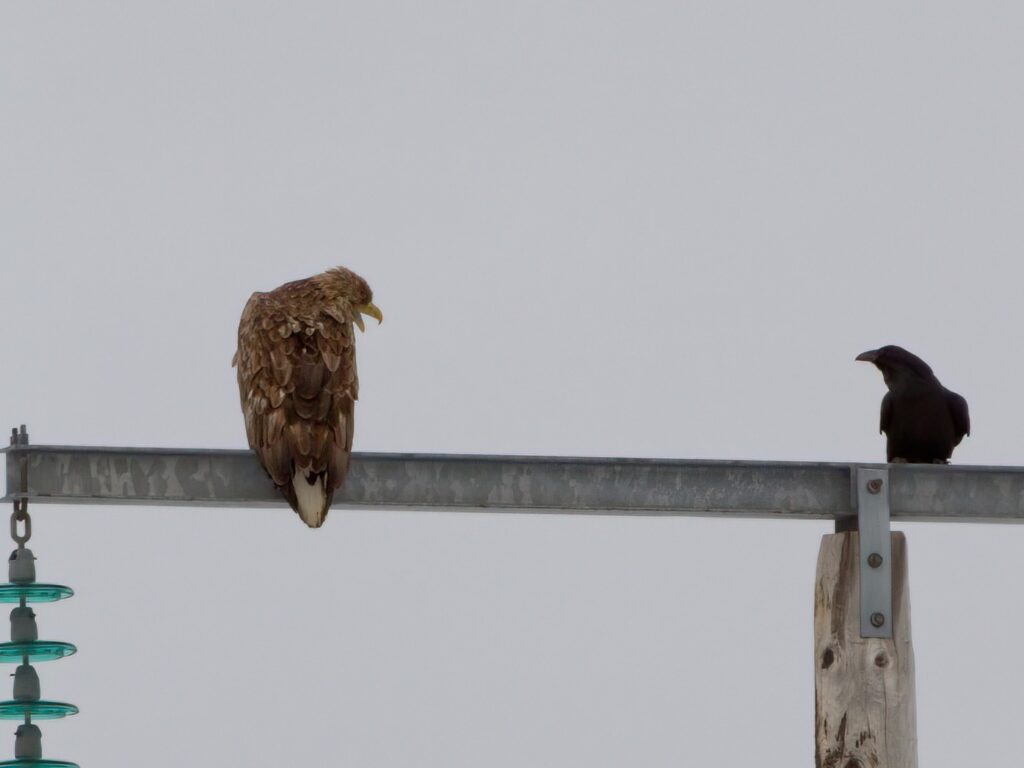
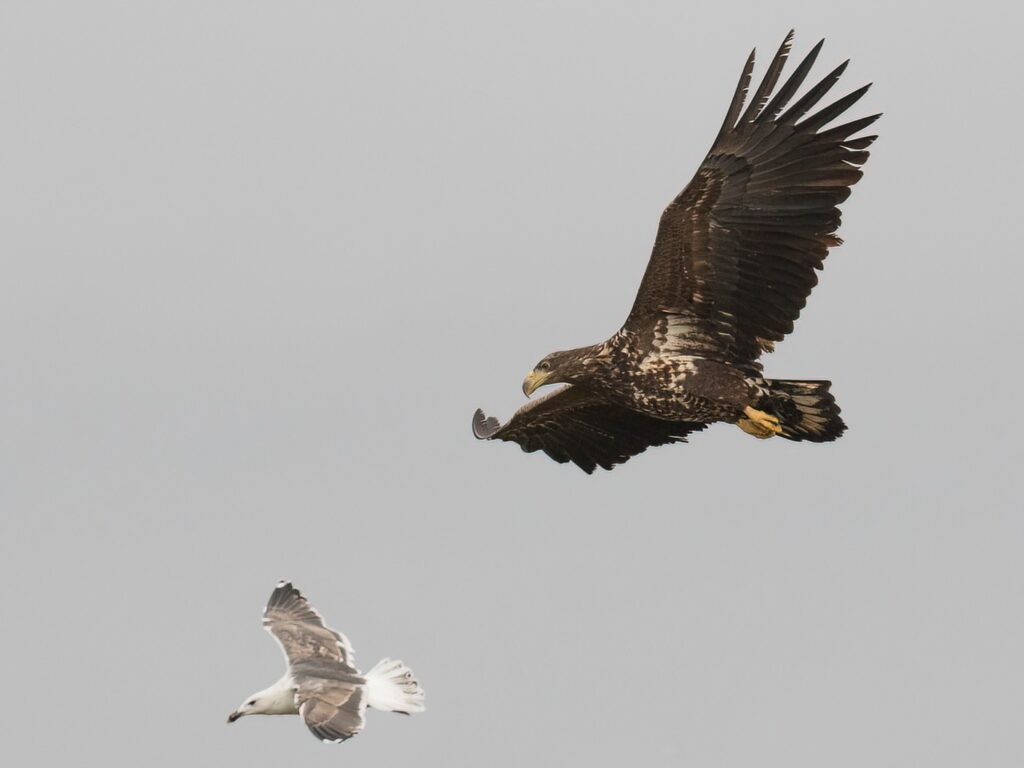
The white-tailed eagle (Haliaeetus albicilla) is one of the world’s largest eagles, only surpassed in size by three others. With a weight of up to 7 kg and a wingspan of up to 2.65 m (females), this is the largest bird of prey in Norway. Adult white-tailed eagles are beige brown with a lighter head, dark wings and a completely white tail. In bright sunlight, the light head can be perceived as white, and make the white-tailed eagle look like the American bald eagle. Young white-tailed eagles are dark chocolate brown. They have a dark tail with some white scattered in the feathers. With age, white-tailed eagles get increasingly lighter colours and a clear yellow beak.
The white-tailed eagle was previously a pursued and hunted species. In addition, the eagles were affected by environmental toxins such as PCB and DDT (an insecticide), which led to their eggs cracking and the chicken foetuses dying during incubation. In 1968 both the golden and white-tailed eagles were protected in Norway. The use of DDT was banned approximately at the same time. Both of these measures led to the start of a rise in the white-tailed eagle population. Today, the white-tailed eagles have taken back much of their original nesting areas along the entire Norwegian coast.
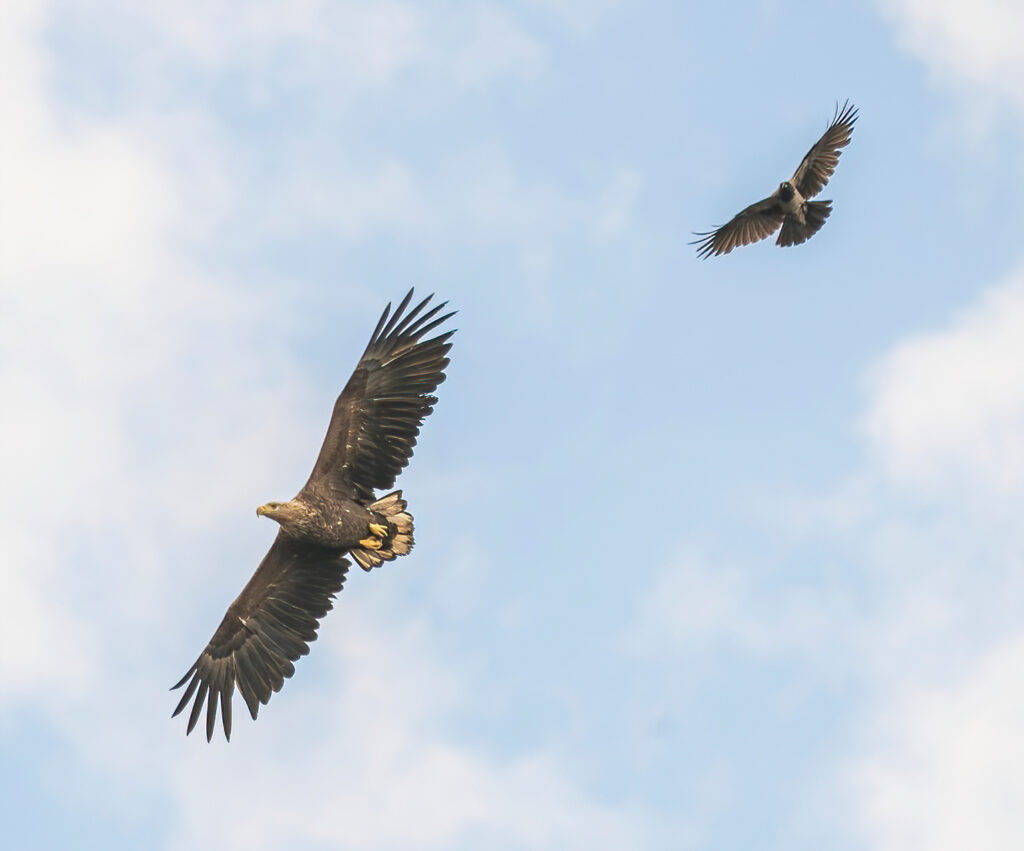
While the last white-tailed eagle mating couples in the Oslo Fjord were shot in 1881 and 1882, there are no known written records of nesting white-tailed eagles along the Agder coastline from the 1800s. In this part of the country, the white-tailed eagle therefore most likely went extinct much earlier. At the end of the 1990s the first eagles were established at the Rogaland border, but nests were not discovered until 2005. After this, the white-tailed eagle has spread along the entire Agder coast, and today there are probably between 10 and 20 couples along this part of the South Norway coast.
The white-tailed eagles build large twig nests in trees or in rock walls. The nesting place can be located a few km inland. This is probably the reason why the eagles can survive along parts of the coast where cabins and boating predominate. While white-tailed eagles can often be seen outside the breeding season, they are often very anonymous and withdrawn while caring for their eggs and young. The white-tailed eagles hunt fish and seabirds and are quick to find carrion. They rarely hunt mammals on land. Where there are otters, the eagles may snatch the remains of the otter’s fish catches.
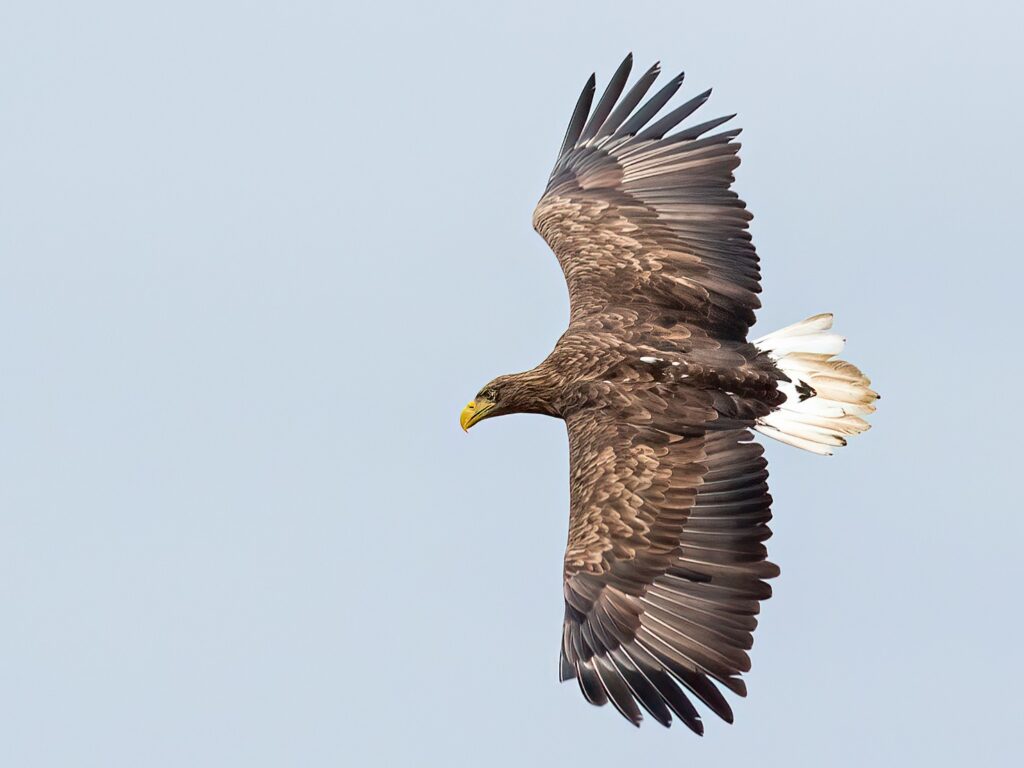
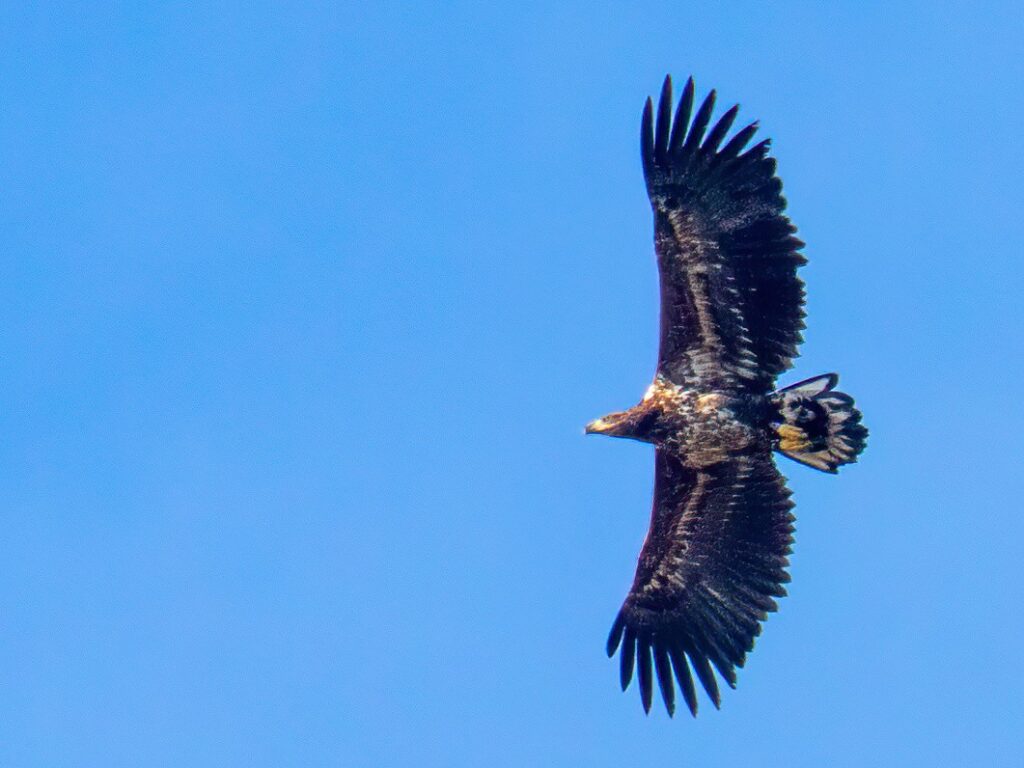
White-tailed eagles like to take advantage of rising hot air to gain altitude. The eagles circle inside a «hot air» bubble and let the air bring them up in height. The eagles can then rise to great heights without a single beat of their wings. The bird keeps its wings straight out, and the profile of an eagle circling in this way can look like a “barn door” in the air! It is a mighty sight to see the white-tailed eagles along the coast.
The return of the white-tailed eagles along the coast of Southern Norway is a sign of health for the ecosystems. This indicates reduced amounts of environmental toxins in the sea, and good access to both fish and seabirds. Without food, the white-tailed eagles will quickly disappear.