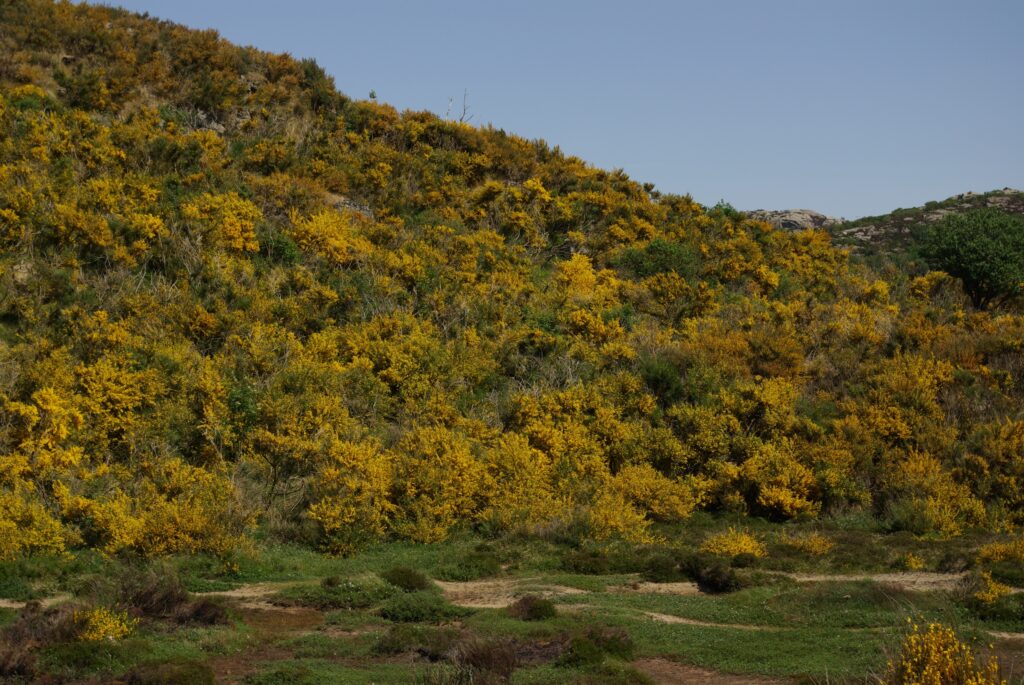

Common broom – Cytisus scoparius
The common broom is a poisonous shrub in the legume family that originates in the Mediterranean area and Western Europe north to Jutland in Denmark. It has evergreen, pentagonal branches without thorns and can grow up to 3 metres tall. The broom has small and silky leaves, and the ones at the very bottom of the bush are clover-like (three-coupled). In May to June, the bush becomes full of yellow pea flowers, which later turn into brown, hairy legumes (seed pods).
In Norway, broom is introduced and used as a garden shrub, and the first documented find comes from 1875 in Kristiansand. Nevertheless, it is uncertain whether broom is actually foreign in Norway. This is because the occurrences between the previous counties Vest-Agder and Rogaland may have been spread as seeds with ocean currents from Denmark, and thus be “naturally occurring”. Despite the uncertainty, broom has been considered a plant with a very high risk in the Alien species List, precisely because the broom that is spreading in most of Norway originates from garden imports.
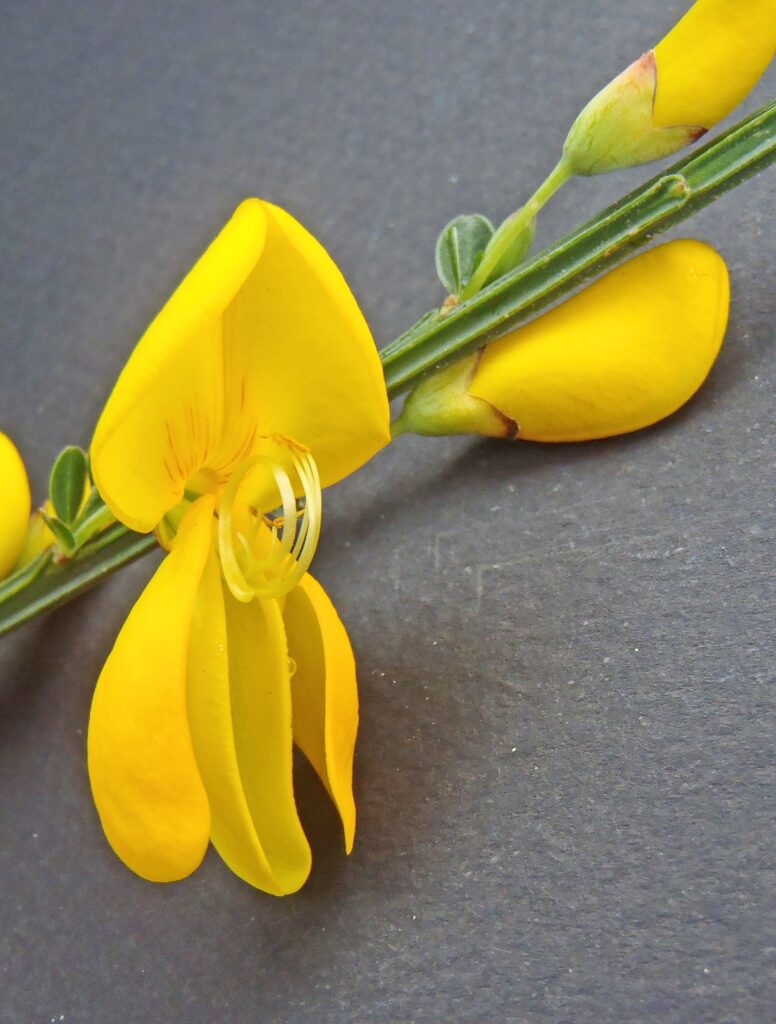
The broom is spread both by seed and by moving soil masses. When the fruit is ripe, it opens with a bang and the seeds are ejected. It spreads well and can form large fields in some areas that displace native species.
The broom can also grow on dry, lean soil, such as in coastal heathlands and roadsides because it has bacterial nodules on the roots that trap nitrogen from the air. The nitrogen that leaks into the soil around the bush facilitates to more competitive but nutrient-demanding species in the area – which in turn can lead to a change in the species composition and structures of the ground flora. Brooms can therefore be particularly problematic when growing in coastal heathland.