
Bird tracks
When birds walk on snow, they leave tracks with three spread out, separate toes. Sometimes you may also see the print from the hind toe. In woodland and in the mountains you usually find tracks from grouse. The size of the foot prints separate the species. The species you most often encounter are willow grouse, black grouse and caipercaillie.
During winter, grouse dig down into the snow when digesting seeds and shoots. This behavior is called docking. In the bottom of such pits you usually find a heap of excrements. Where the grouse has taken to the wing, you will also see the prints from the wing´s primary feathers.
A bird’s foot has a maximum of 4 toes (but they may have fewer toes). Usually 3 toes face forward and 1 toe backwards (in some species the hind toe is missing, or it sits so high up that it does not leave an imprint in the groove). Birds have lost the little toe (toe no. 5), and it is the thumb (toe no. 1) that faces backwards. Of the toes facing forward, the middle toe is the longest. When a bird moves on the ground, it occurs either in jumps (track footprints in pairs next to each other), walking (track footprints one after the other in zigzag or on a line), or running (greater distance between the track footprints).
Chickens
The hens typically have “walking feet” (or “running feet”) that are strong and strong with short claws to scrape the ground. They move in motion or run, and the track row will then be a zigzag-shaped line or a straight line. Chickens (large birds, grouse, grouse, grouse) often leave pits in the snow where they have landed. Where they fly up, imprints are seen after the wing feathers.
Click the image to read more about…
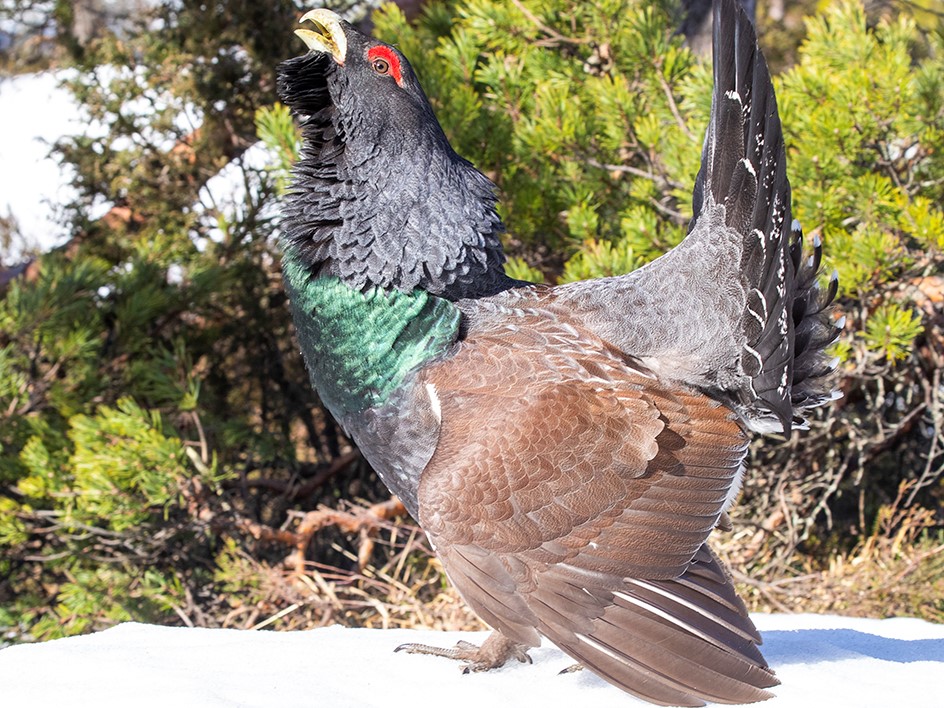
Capercaillie
(Tetrao urogallus)
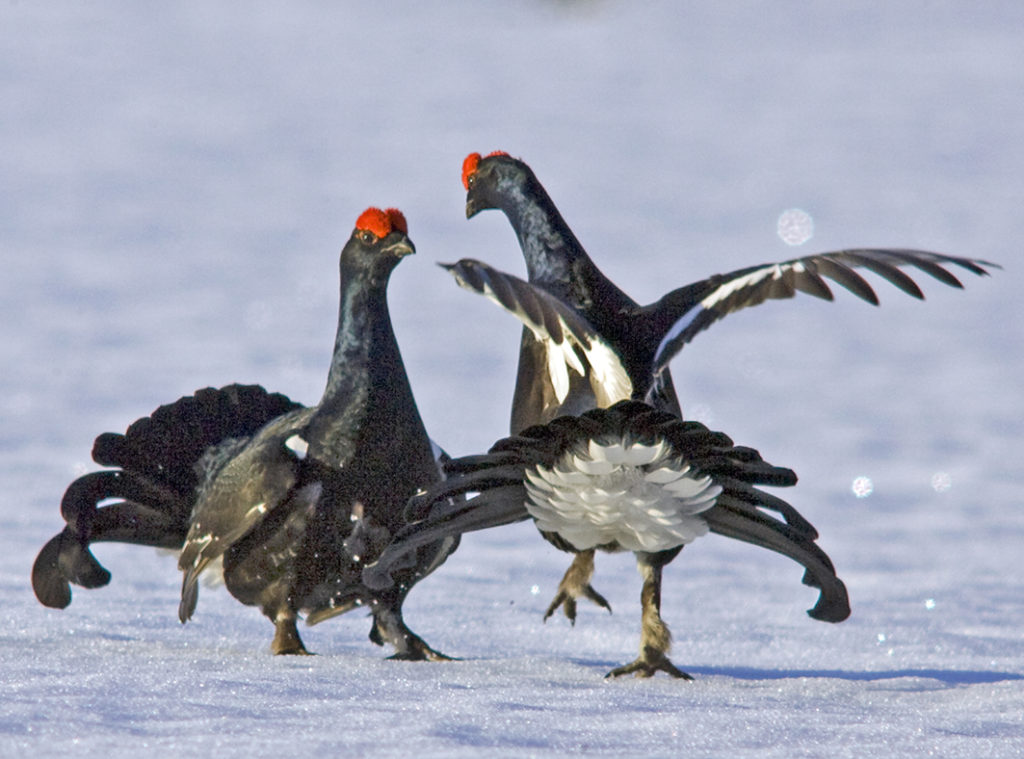
Black grouse
(Tetrao tetrix)
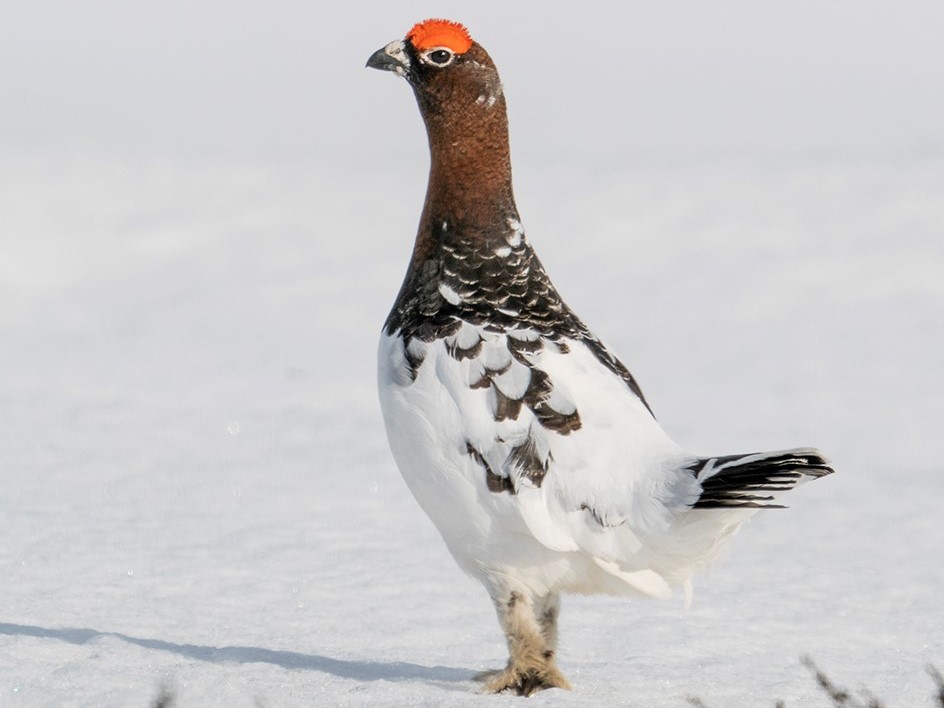
Rock ptarmigan
(Lagopus lagopus)
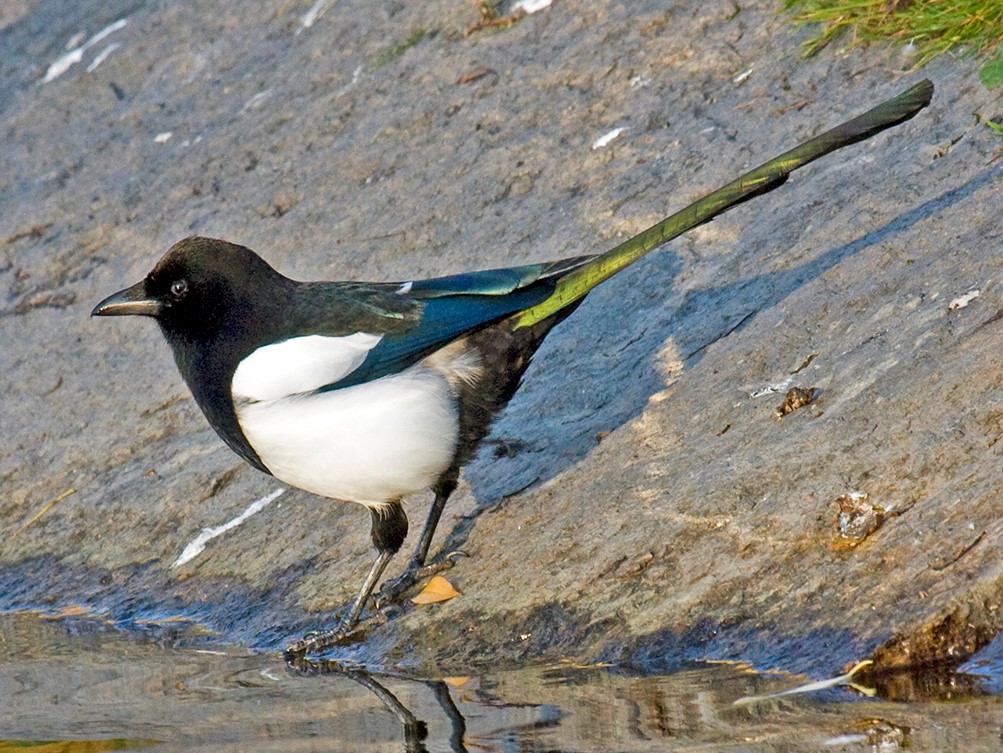
Magpie
(Pica pica)