The European flat oyster
The oyster thrives in the tidal zone and down to a few metres’ depth. It usually attaches itself to the substrate, on rocks or other mussel shells.
Water temperature plays an important role in the life of a flat oyster. This is a species that changes sex, and this process is determined by the surrounding temperature. Also, to become sexually mature, the flat oyster requires a water temperature of at least 16-18 ºC.
As the oyster is attached to the substrate, it is dependent upon water currents bringing its favourite meal – phytoplankton and bacteria.
The flat oyster went from being classified as an Endangered (EN) species on the Norwegian Red List in 2010, to Near Threatened (NT) in 2015. Today it is classified as Least Concern (LC), meaning that it has been removed from the Red List.
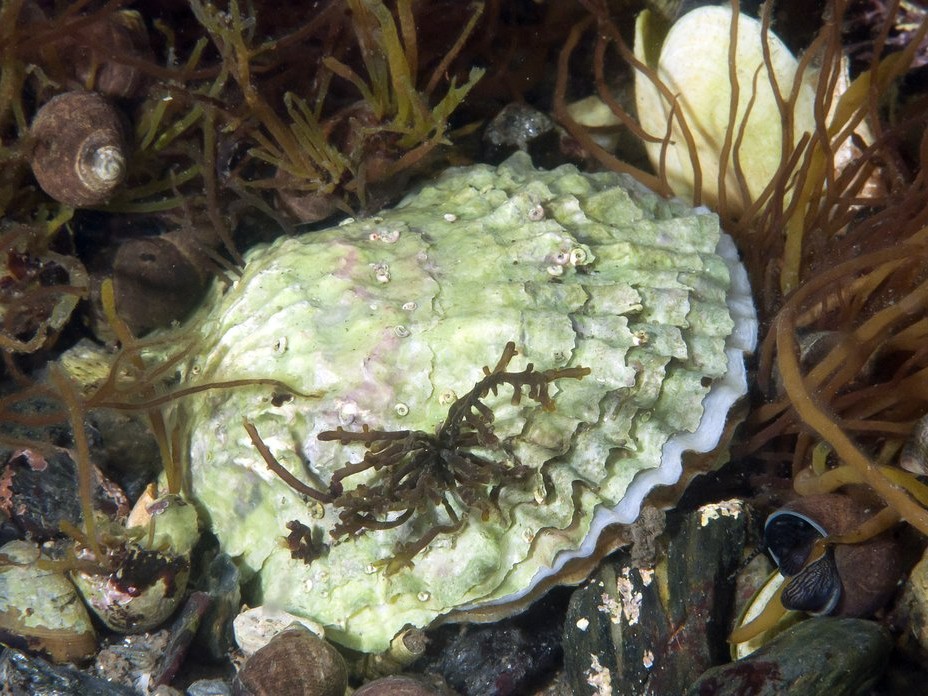
Photo: Erling Svensen/Institute of Marine Research