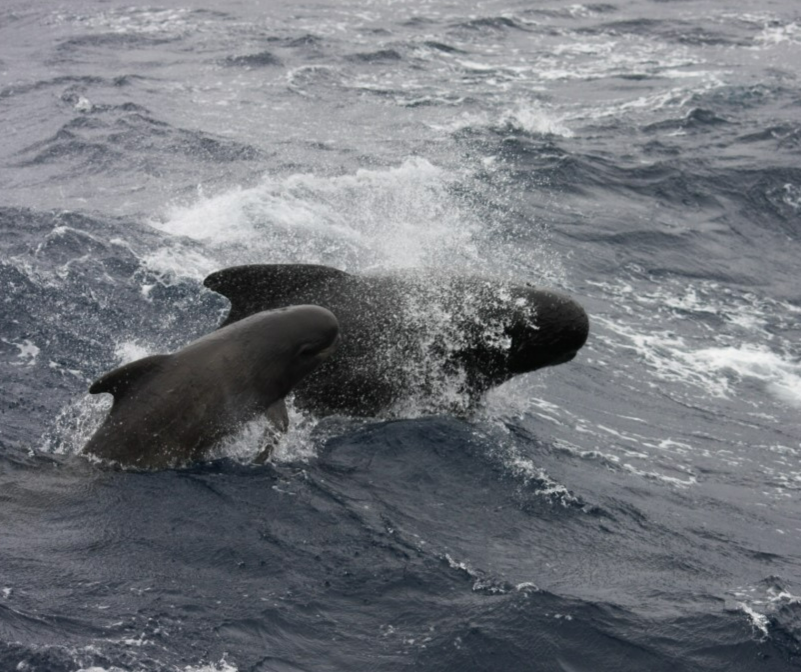

Long-finned pilot whale
There are two species of pilot whale: long-finned and short-finned. It is the long-finned (Globicephala melas) that lives in the North Atlantic. The pilot whale is a large dolphin that lives both along the coast and in the open ocean. In Norway, the pilot whale can be observed especially in summer, and it is most common from western Norway and north to the southernmost parts of Svalbard/Spitsbergen. There are also sporadic observations of pilot whales in Agder, and it happens that individuals strand here. This was the case for the pilot whale owner of the skeleton you see here: the 4.45 m long pilot whale female was found stranded on Tromøy in Arendal in the autumn of 2019. The Natural History Museum’s zoologists were asked to investigate whether there was plastic in the whale’s stomach – which there was not. The cause of death remains unknown.
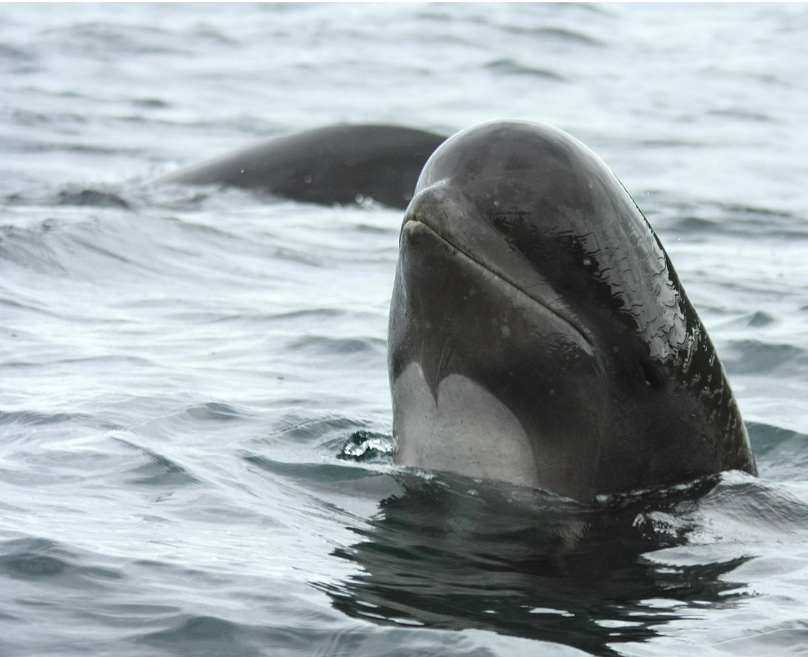
The pilot whale is black or dark grey with a lighter area behind the dorsal fin and on the chest. The body is robust, and it differs from other dolphins in that it has a very round head and a clear melon/fat hump. The melon is an important organ for communication and echolocation. It is found on the forehead of all toothed whales and consists of mainly adipose tissue. The pilot whale is otherwise easily recognizable by the long pectoral fins, which are as long as 20% of the body length. Normal body length for adult individuals is between 4 and 6 metres, with males being larger than females. The pilot whale can live to be between 45 and 60 years old.
The pilot whale’s favourite prey is squid, and the whale’s migrations are linked to where this prey animal resides. The pilot whale can also eat small fish, such as Greenland halibut, mackerel, herring and cod. Most pilot whale dives are not deeper than 20-30 metres, but there are records of pilot whales diving down to 1000 metres. It usually dives no longer than a few minutes at a time, and even the deepest dives usually last shorter than 20 minutes.
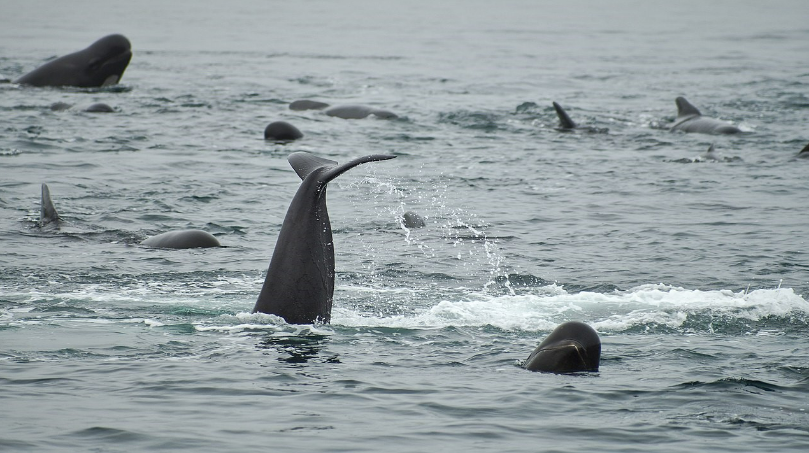
The pilot whale is a social species that lives in family groups of tens to a few hundred individuals. This social behaviour is probably contributing to the pilot whale being among the species most often reported in mass strandings. It is not known whether this is natural behaviour, or if the strandings can be linked to human activity, like acoustic pollution (sonar and seismic activity).
Unfortunately, the pilot whale, along with the killer whale, is among the most polluted species in the world –heavy metals, insecticides (DDT), industrial chemicals (PCBs) and brominated flame retardants (PBDEs) are found in blubber, meat, liver and kidneys. This can lead to increased calf mortality, an impaired immune system, hormonal disorders, changes in fertility and harmful tissue changes in the kidneys and liver. In addition, pilot whales are caught as bycatch in fisheries, and they can get stuck and die in abandoned fishing gear. The pilot whale is protected in Norway, and it is rated as Least Concern (LC) on the Norwegian Red List.